
How to Organize Your Wedding Website
Introduction
Planning a wedding today means more than securing a venue and sending invitations—it means creating an online hub that keeps your guests in the loop and excited for your big day. An effective wedding website provides essential logistical details and reflects your personal style as a couple. From sharing your love story to helping guests navigate travel arrangements, a thoughtfully designed wedding website can make your event smoother and more memorable. To view a real-life example, consider wedding photography galleries from Bradley Bakotic, where storytelling and visuals unite to create lasting impressions.
Early planning pays off. Launching your site once you have key details ensures your guests are prepared and informed. In addition to logistical information, highlight your personalities and journey as a couple and showcase all the fun in store. By blending functional details with personal touches, your website becomes more than an invitation—it becomes a cherished part of your wedding experience.
Choose a Memorable Domain Name
Your wedding website’s domain is often the first impression guests will have, so keep it short, simple, and memorable. Avoid complicated spellings, numbers, or punctuation, and opt for a URL that features your names or a unique phrase meaningful to both of you. This not only makes it easy for guests to access the site but also adds a personal touch that sets the tone for your celebration. For more tips on picking the optimal domain name, Harper’s Bazaar offers excellent advice.
Select a Cohesive Design
Choose a template and color palette that reflect your wedding theme and overall aesthetic. Consistency in design helps create a seamless experience and excites guests about what’s to come. Integrate professional photographs if you have them—engagement photos work wonderfully—to make your site visually compelling and distinctly yours. Prioritize readability and mobile-friendliness so guests can easily browse on any device. Many modern platforms provide customizable themes to align your site with the rest of your wedding branding.
Include Essential Event Details
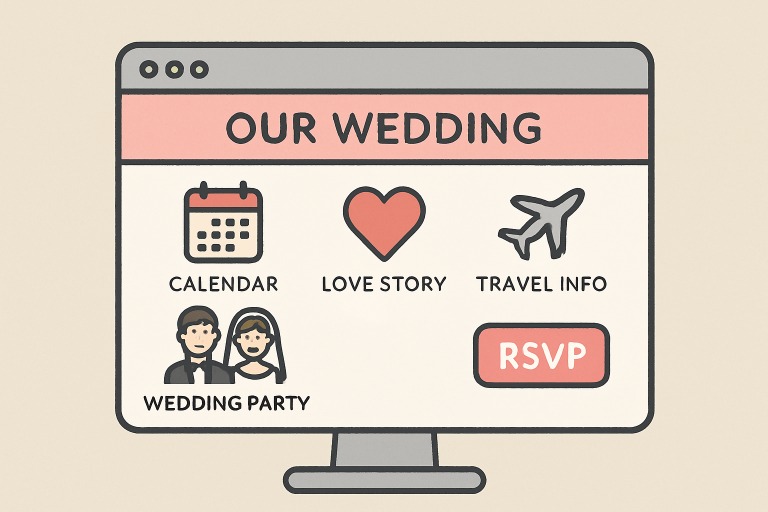
Clearly outline the time, date, and location of each wedding-related event. Don’t forget separate details for the ceremony, reception, rehearsal dinner, or post-wedding brunches if applicable. Providing this information upfront minimizes guest confusion and helps everyone plan ahead, especially those traveling from out of town. Consider an easy-to-find “Details” or “Schedule” tab in your site’s navigation so no one misses crucial info.
Share Your Love Story
One of the most endearing parts of any wedding website is the “Our Story” section. Share how you met, your favorite memories, and the proposal story. Guests love these glimpses into your journey—and for those who may not know both of you as a couple, it’s a chance to better connect before the big day. According to Fox News Lifestyle, including this human touch makes your site more engaging and memorable.
Introduce the Wedding Party
Recognize those closest to you by adding photos and brief bios for each member of your wedding party. Not only does this help guests put faces to names, but it often sparks conversation and camaraderie at your event. Highlighting your maid of honor, best man, bridesmaids, and groomsmen also conveys appreciation for their role in your celebration.
Provide Travel and Accommodation Information
Out-of-town guests will appreciate detailed travel advice, directions, and recommended lodging. If you’ve secured room blocks at local hotels, ensure those details and booking links are easily accessible. Don’t forget to mention public transportation, parking options, or shuttle services if available. For more on what to include, see AZ Big Media’s wedding website essentials.
Add a Registry Section
Include links to your online registries in a dedicated section. Update these links regularly and ensure each registry is clearly labeled so guests know what each is for. This convenience saves guests time and ensures your registry items are easy to find. Some platforms let you sync registries directly or add a widget for a seamless user experience.
Incorporate an RSVP Form
Adopt a digital RSVP form to centralize and simplify attendance tracking. Online RSVPs are faster for guests and easier for you to manage, especially when tracking special meal requests or song suggestions. Ensure the form is intuitive, mobile-friendly, and includes all the key questions you need answered. Guidance on digital RSVP setup can be found at Squarespace’s wedding website tips.
Offer Local Recommendations
Add a section with suggestions for local attractions, dining, shopping, and activities. This is a thoughtful way to help guests—particularly those visiting from outside the area—make the most of their trip. Curate options for various interests and budgets, and link to official tourism, restaurant, or city guides as further resources.
Create an FAQ Page
Address common questions in a well-organized FAQ section. Cover topics like dress code, parking, whether children are welcome, and how to handle special requests. This reduces repeated inquiries and ensures all guests feel prepared and confident about the day’s logistics. For suggestions on common guest questions, review The New York Times’ wedding website best practices.
When executed thoughtfully, your wedding website is an informational resource and a personal memento. Prioritize clarity and accessibility, but don’t forget to infuse your personalities along the way. With a well-organized site, you’ll free yourself from endless emails and ensure your guests enjoy a seamless, joyful wedding experience when they receive their invitation.