Are Zygomatic Dental Implants Changing Patient Outcomes?
Advancements in dental technology continue to redefine the limits of restorative care. Innovative solutions are now addressing complex cases that once had few viable treatment options. Among these breakthroughs, specialized implant techniques are reshaping outcomes for patients with significant bone deterioration.
Dental restoration is entering a new era with the advent of zygomatic dental implants. As a lifeline for patients suffering from severe upper jaw bone loss, these implants are transforming what’s possible in oral rehabilitative care. Once considered ineligible for traditional implants, many individuals can now regain function and confidence thanks to this innovative technique.
Zygomatic implants offer renewed hope and a solid pathway to restoring a patient’s smile, particularly when the conventional approach is no longer viable. Their distinct placement and method provide clear benefits to those who thought tooth replacement was out of reach. This article examines the mechanics, advantages, and evolving landscape of zygomatic dental implants, revealing how they are reshaping treatment outcomes.
Understanding Zygomatic Implants
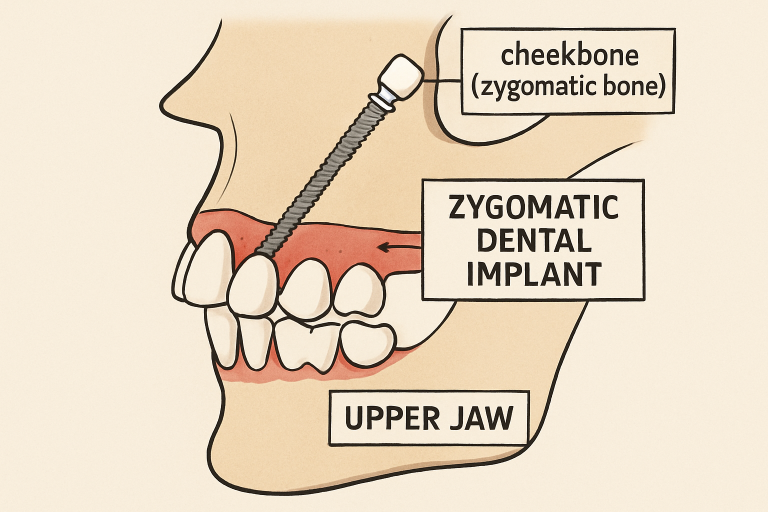
Zygomatic implants are engineered explicitly for patients with extensive bone loss in the upper jaw. Rather than relying on the standard anchor points in the maxilla, these implants are secured in the sturdy zygomatic bone, commonly known as the cheekbone. This anatomical feature is typically dense and stable, providing an optimal surface for implant support when upper jaw bone density is insufficient for conventional methods. This approach eliminates the need for prominent bone grafting procedures, reducing complexity and surgical morbidity for the patient.
Advantages Over Traditional Implants
The primary advantage of zygomatic implants is their ability to circumvent the challenge of bone deficiency in the upper jaw. Traditional dental implants require an adequate quantity and quality of bone for stability and long-term success, but zygomatic implants provide a solution even for those with considerable bone atrophy. Treatment times are often shorter because patients can avoid prolonged bone graft healing periods. The immediate stability offered by anchoring into the zygomatic bone also translates into faster rehabilitation and improved predictability of results.
Moreover, this option often allows for immediate loading, meaning a provisional prosthesis can frequently be placed right after surgery. This rapid transition significantly boosts patient confidence and improves their day-to-day quality of life. According to the American Academy of Implant Dentistry, such advancements continue to close the gap between tooth loss and optimal restoration.
Clinical Success Rates
Extensive research supports the efficacy of zygomatic implants in both the short and long term. Several clinical studies report survival rates of 95–100% for zygomatic implants over several years, comparable to or even surpassing those of traditional implants in compromised maxillae. A notable study published in PubMed reported 100% survival rates for implants and prostheses, with a mean follow-up period of more than three years. Additionally, sinus health was preserved or improved for the majority of cases, emphasizing both the safety and functionality of this technique.
Patient Satisfaction and Quality of Life
Zygomatic implants have a transformative impact on patient-reported outcomes, particularly for individuals with severe maxillary bone loss. Research consistently highlights substantial improvements in oral health-related quality of life, including more efficient chewing, clearer speech, and the restoration of natural facial contours. Beyond functional benefits, patients often experience significant emotional and social gains, regaining self-esteem and confidence that allows them to participate more fully in personal, professional, and social activities. These positive changes are especially meaningful for patients previously considered ineligible for traditional dental restorations, offering them a viable, life-enhancing solution that restores both oral function and overall well-being.
Technological Advancements in Zygomatic Implantology
The use of computer-guided surgery and digital workflows has taken zygomatic implantology to new heights. Computerized tomography (CT) and 3D digital scans allow clinicians to evaluate bone volume, identify vital anatomical structures, and plan implant placement with unprecedented accuracy. 3D-printed surgical guides, combined with real-time navigation systems, help minimize risks and further improve patient outcomes. Advanced prosthetic materials and CAD/CAM technology enhance the results, making them more durable and natural-looking.
Potential Complications and Management
Like all surgical interventions, zygomatic implants are not without risks. The most commonly reported complication is sinusitis, which is observed in approximately 5-6% of cases. Other potential issues include implant failure, soft tissue inflammation, or nerve involvement. However, careful patient selection, precise surgical technique, and modern imaging technologies have significantly reduced these risks. Most complications can be successfully addressed with early intervention, medication, or minor procedures, ensuring patient safety and comfort throughout the recovery process.
Future Trends in Zygomatic Implants
The dental implant field is rapidly advancing, with ongoing research aimed at creating metal-free alternatives for patients who experience allergies or sensitivities to traditional metal implants. Innovations in imaging technologies, combined with artificial intelligence, are improving treatment planning by offering greater precision, predictability, and safety during procedures. At the same time, minimally invasive techniques and immediate-loading protocols are becoming increasingly popular, reducing recovery times and enhancing overall patient comfort. These combined advancements are expected to increase patient acceptance, satisfaction, and long-term outcomes, shaping a future where dental implant treatments are safer, faster, and more accessible than ever.
Conclusion
Zygomatic dental implants have revolutionized the treatment of severe upper jaw (maxillary) bone loss, offering patients solutions that were once considered impossible. Their advanced design and integration with modern implant technology enable clinicians to achieve high success rates, even in complex cases where traditional implants may fail. These implants enable faster rehabilitation, restoring both function and aesthetics with predictable outcomes. For patients previously limited by insufficient bone or extensive tooth loss, zygomatic implants provide a reliable pathway to regain confidence, improve chewing ability, and achieve an overall enhanced quality of life, marking a transformative advancement in contemporary dental implantology.